What are the common connection types of dental implants exactly?
Dental implants vary greatly across different brands, insertion techniques and connection designs.
Below I will break them down for you in detail!
01
Generally speaking, a dental implant system consists of the implant fixture embedded in the jawbone (the artificial root portion) and the dental crown. The fixture and crown are connected via an abutment.
A one-piece implant crown refers to an integrated unit combining the abutment and crown as a single component.
This restoration is primarily secured with screws. To draw an analogy, it is like a sugar-coated haws skewer: the abutment and crown are fabricated into one piece, then fastened onto the implant fixture by screw tightening, forming a single-piece crown supported by the implant fixture.
According to the overall structural design of implants, they fall into two categories: one-piece implants and two-piece implants. For various clinical reasons, one-piece implants are rarely used domestically, so they will not be elaborated on here. The following discussion focuses on the structures and connection systems of two-piece implants.
The so-called two-piece implant (the mainstream type introduced in most materials) splits the implant into two separate components: the fixture embedded into the alveolar bone, and the abutment for crown mounting.
Conventionally, the bone-embedded component is termed the implant fixture, and the crown-attaching component is called the abutment. Since the restoration comprises two separate parts, the connection design between them becomes a critical consideration. The connection modes of these two components are explained in detail below.
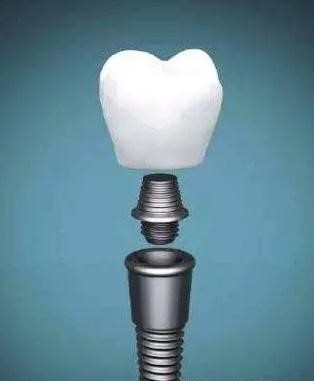
The connection types between implant fixtures and abutments are generally classified into internal connection and external connection.
Characteristics of External Connection
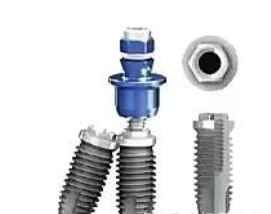
- The abutment features an external protrusion, whose height is limited by the interocclusal space. This compromises its anti-rotational performance.
- The junction structure of the abutment is mechanically weak. The protruding section under heavy occlusal load carries a high risk of fracture; additionally, removal and replacement are difficult to perform.
- The implant fixture sits subgingivally, so the fixture-abutment joint cannot be visualized directly. Clinicians can barely judge full seating by tactile sensation during operation, and repeated X-ray radiographs are often required to verify complete seating.
Professional English Translation (Dental Implant Academic Standard)
Characteristics of Internal Connection
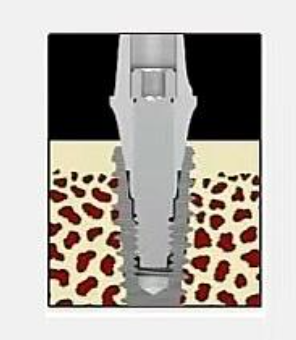
- Compared with external connection, internal connection provides more available space for the abutment, which enhances connection stability and the esthetic outcome of restorations.
- The abutment is equipped with polygonal grooves to prevent rotation.
- A specific taper on the axial surface of the abutment generates sufficient frictional force to achieve self-locking stability.
- The abutment delivers superior sealing performance.
- If the abutment fractures, it can be replaced easily.
Details determine success or failure.
Appendix: Explanation of Implant Component Structures
The fixture embedded in bone achieves osseointegration with surrounding bone tissue and functionally serves as an artificial tooth root.The abutment acts as a connector linking the implant fixture and the dental restoration, providing retention and connection support.
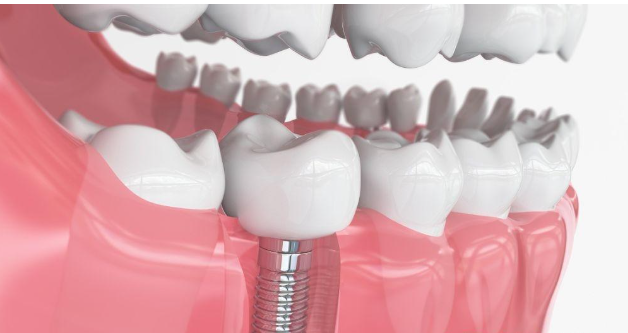
over Screw (Healing Abutment)A component placed on top of the implant fixture during the first-stage surgery. It prevents bone and soft tissue from invading the fixture-abutment joint space during healing prior to second-stage surgery.
Transfer Component (Impression Transfer)Also known as transfer cap, transfer post or impression coping. It transfers the position and orientation of the implant abutment within the dental arch to the working cast during impression taking.
AnalogIt replicates the implant fixture inside the stone model to facilitate laboratory fabrication of restorations.


