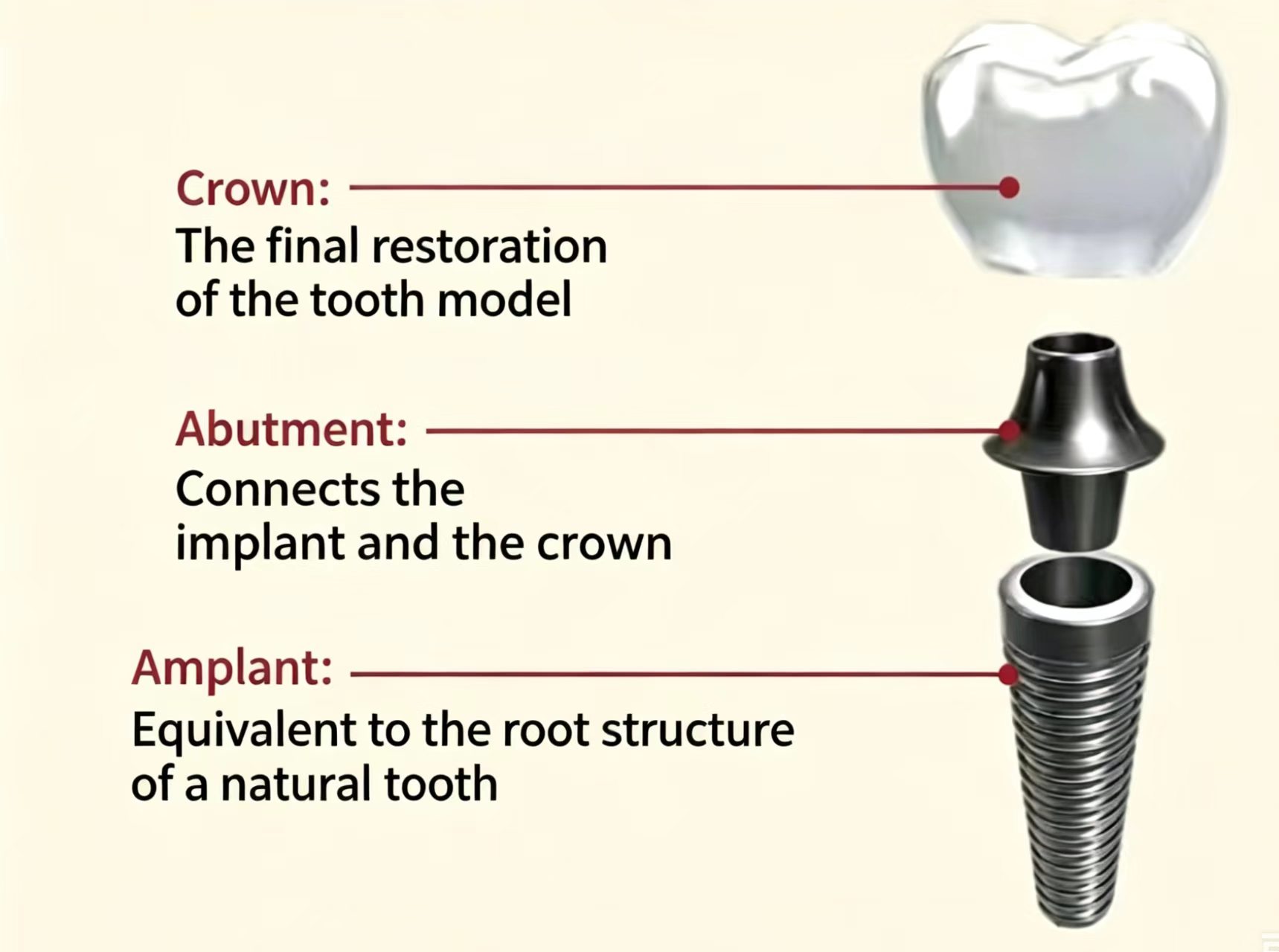
Have you ever wondered how a dental implant embedded in the jawbone connects through the gum to support a prosthetic tooth? The implant abutment, commonly referred to as the abutment, is an intermediate component that links the implant fixture to the final upper restoration.
Its primary functions include facilitating the formation of a gingival cuff at the implant-gingival interface. After the dental crown is fitted, it ensures a tight adaptation between the crown and gum, achieving a natural look identical to original teeth. Additionally, it blocks bacterial infiltration and prevents the development of periodontal pockets or periodontitis around the implant. To draw an analogy with house construction, beams are essential to hold up floors and eaves — and the abutment serves exactly this load-bearing role.
Classification of Abutments
The shape of healing abutments varies according to the platform design of dental implants.
Classified by shape
- Tapered healing abutment
- Cylindrical healing abutment
- Combined healing abutment
Classified by material
The most widely used types are pure titanium abutments, all-ceramic abutments and titanium alloy abutments.
Differences Among Various Abutments
1. Pure Titanium Abutment
Pure titanium features excellent biocompatibility, durability and mechanical strength, contributing to a high implant success rate. It also boasts superior wear resistance and corrosion resistance, causes minimal irritation to oral tissues, and is extensively applied in clinical treatment.
2. All-Ceramic Abutment
All-ceramic materials deliver ideal translucency and luster, which perfectly meet aesthetic demands. They also possess remarkable corrosion resistance, an unrivaled advantage over other materials.
3. Titanium Alloy Abutment
Titanium alloy is harder than pure titanium and all-ceramic materials. It is highly durable, wear-resistant and corrosion-resistant with great cost performance, so it is popular among many patients. Its main downside is unsatisfactory aesthetic outcomes for implant restorations.