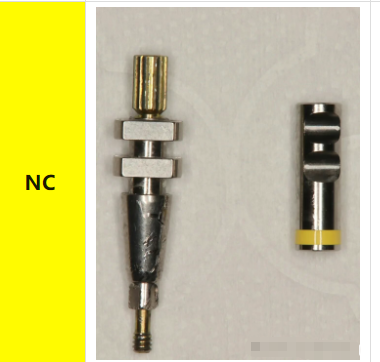
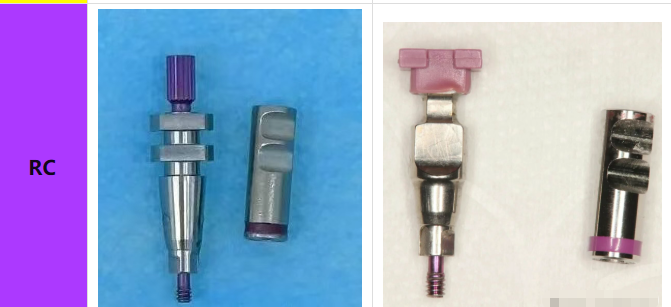
In the Straumann implant system, open-tray and closed-tray impression techniques are two common impression methods applied to diverse clinical scenarios. Below are the differences between impression posts and analogs of the two techniques.
1. Definition
- Impression coping: Special component that accurately transfers the position of intraoral abutments or implants to the working model during impression taking, also known as impression post or transfer abutment.
- Implant analog: Replica of the implant, used to precisely reproduce the position and orientation of the implant on the model.
2. Open-tray Impression
- Open-tray impression post: Equipped with a screw hole. During impression taking, the screw penetrates the opening of the impression tray and is fastened directly onto the implant or abutment.
- Application scenarios: Suitable for cases where the long axis of the implant fails to align with the impression direction, or high-precision impression taking is required.
Analog and impression post for open-tray impression
II. Closed-Tray Impression
- Closed-tray impression post: No screw hole. Insert directly into the implant or abutment during impression taking, with the impression tray fully covering the post.
- Application scenarios: Ideal for cases where the implant long axis aligns with the impression direction, featuring simpler operation.
III. Main Differences
| Comparison |
Open-Tray |
Closed-Tray |
| Screw hole on impression post |
Yes |
No |
| Tray opening required |
Yes |
No |
| Precision |
Higher |
General |
| Applicable cases |
Complex |
Simple |
| Operation difficulty |
Relatively difficult |
Relatively easy |
IV. Summary
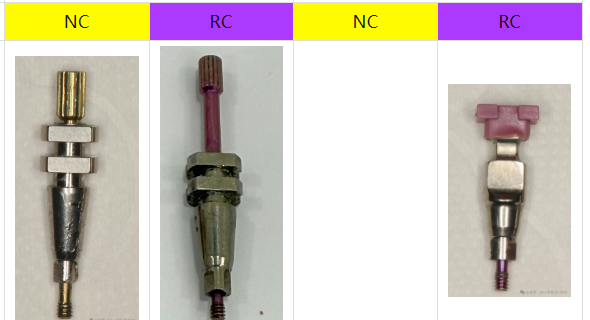
1.ITI impression posts Open-tray impression Closed-tray impressio
- 2. ITI implant analog
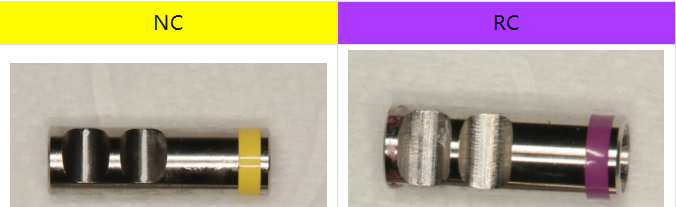
Impression post & implant analog